
Analysis of Crude Oil Tanker Fleet & Environmental Threat by Pole Star Global – Research, Analytics & Data (RAD) Team
Table of Contents
EXECUTIVE SUMMARY
This report analyses 29 Iranian-flagged crude oil tankers that are suspected of being part of the global shadow fleet. While not all the tankers are sanctioned we see significant gaps in AIS reporting or situations where the vessel has completely gone dark since December 15 (for the purposes of this paper we will refer to this as the Iranian dark fleet). December 15th is a significant date since it was 2 days after the capture of the first Venezuelan oil tanker by the United States. The analysis reveals significant ecological risks posed by aging vessels with substantial carrying capacity operating under reduced regulatory oversight and without Western insurance coverage.
CRITICAL FINDINGS
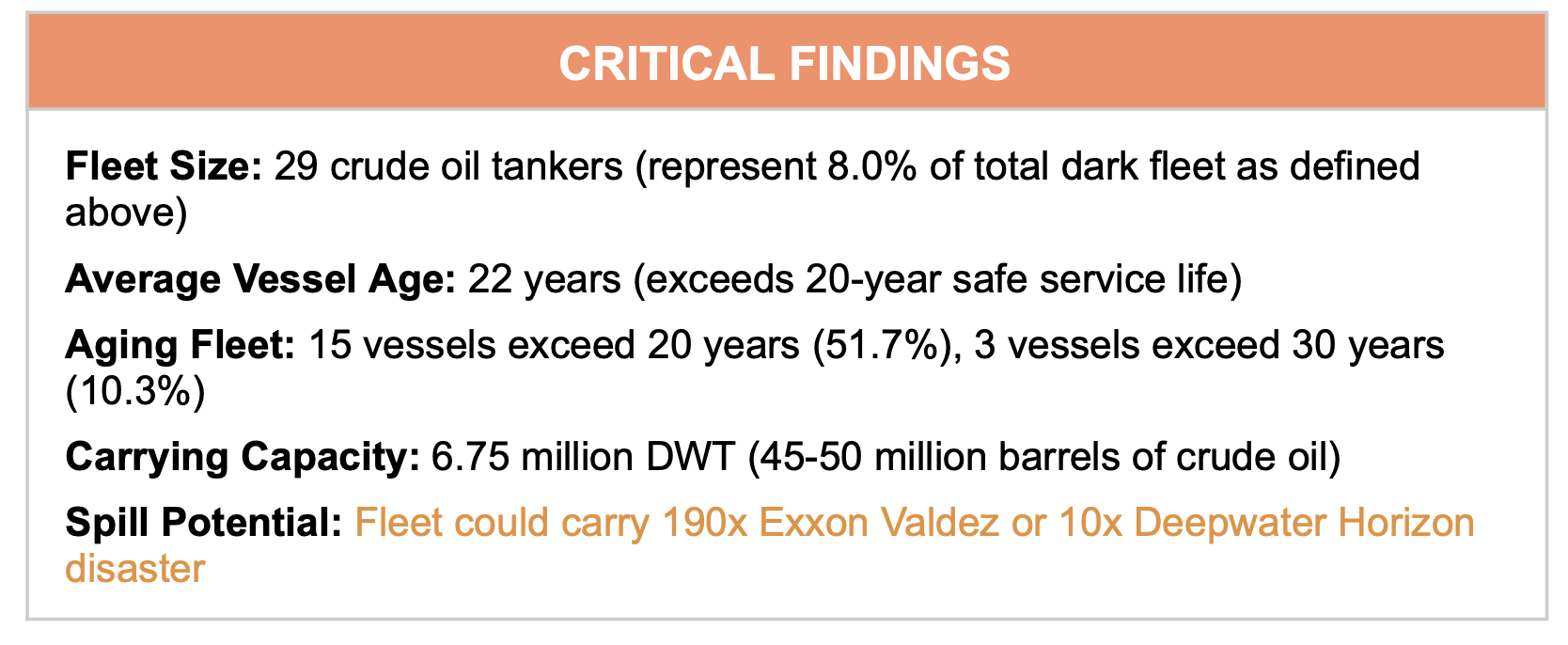
The combination of advanced vessel age, lack of Western insurance, and reduced maintenance standards under sanctions creates an elevated risk of catastrophic environmental damage with limited ability to hold countries, companies, or individuals responsible.
FLEET OVERVIEW & STATISTICS
Fleet Composition
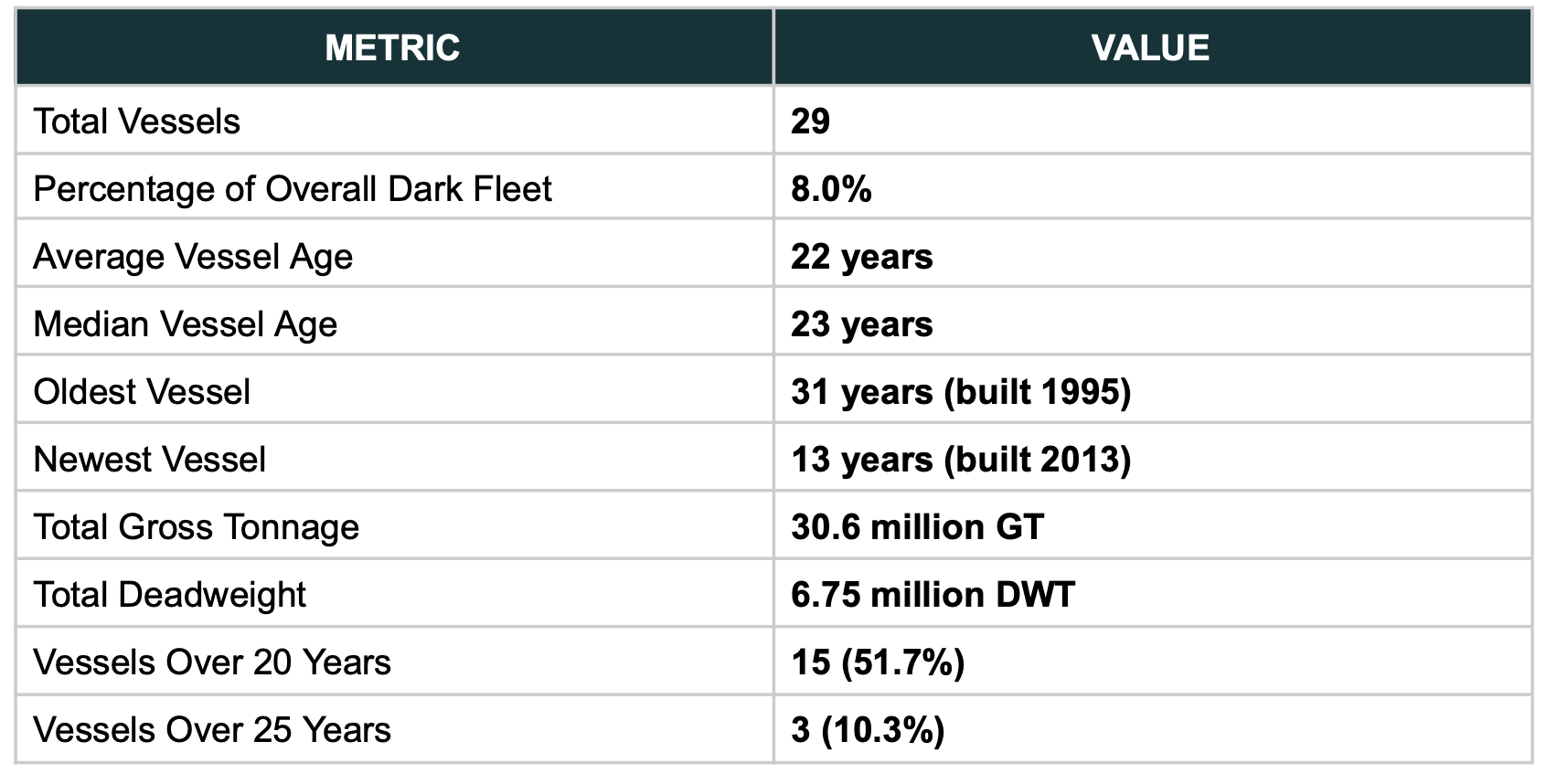
The Iranian-flagged component of the global shadow fleet consists of 29 crude oil tankers with a combined gross tonnage of 30.6 million tons and deadweight capacity of 6.75 million tons. This fleet represents a concentrated ecological risk due to several compounding factors: advanced vessel age, operation under sanctions constraints, lack of international insurance coverage, and potential gaps in maintenance and inspection protocols.
Visual Analysis
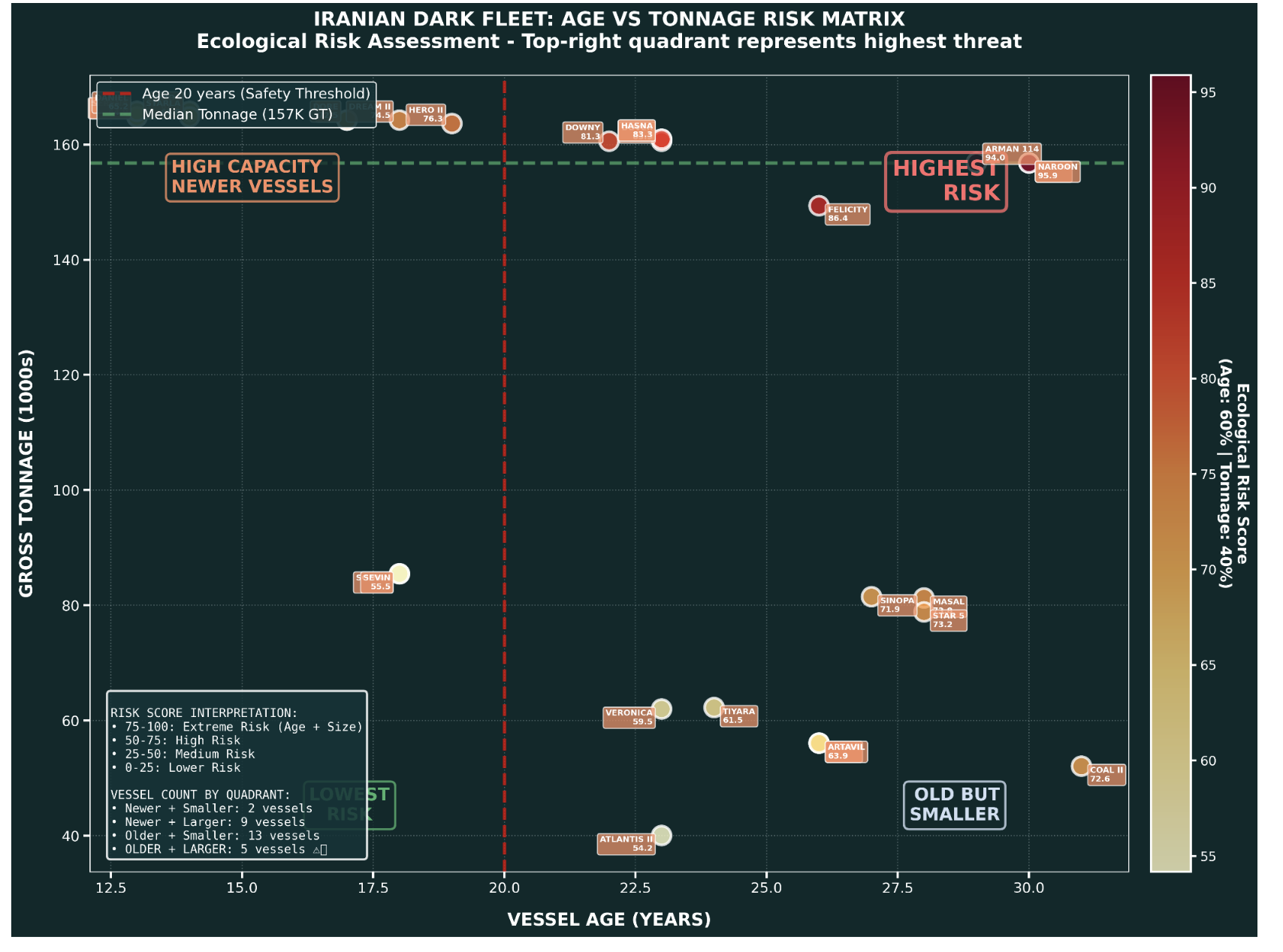
Figure 1 – Ecological Risk Assesment
RISK MATRIX FINDINGS
Overall Fleet Risk Profile:
- All 29 vessels score Medium to High risk (no vessels below 50)
- 9 vessels (31%) are in the extreme risk category (score >75)
- Average ecological risk score: 73.4
Highest Risk Quadrant (Top-Right): 5 vessels combining old age (>20 years) + large capacity (>median tonnage):
- ARMAN 114 – Score 94.0 | 29 years old | 156,880 GT | 300,579 DWT
- HENNA – Score 83.3 | 23 years old | 160,930 GT | 299,242 DWT
- HASNA – Score 83.3 | 23 years old | 160,930 GT | 299,229 DWT
- DOVER – Score 83.3 | 23 years old | 160,576 GT | 296,977 DWT
- DOWNY – Score 81.3 | 22 years old | 160,576 GT | 296,977 DWT
Combined threat from these 5 vessels alone:
- 799,892 gross tons
- 1.49 million DWT (~11.8 million barrels capacity)
- Could cause spill 12-13x larger than Exxon Valdez
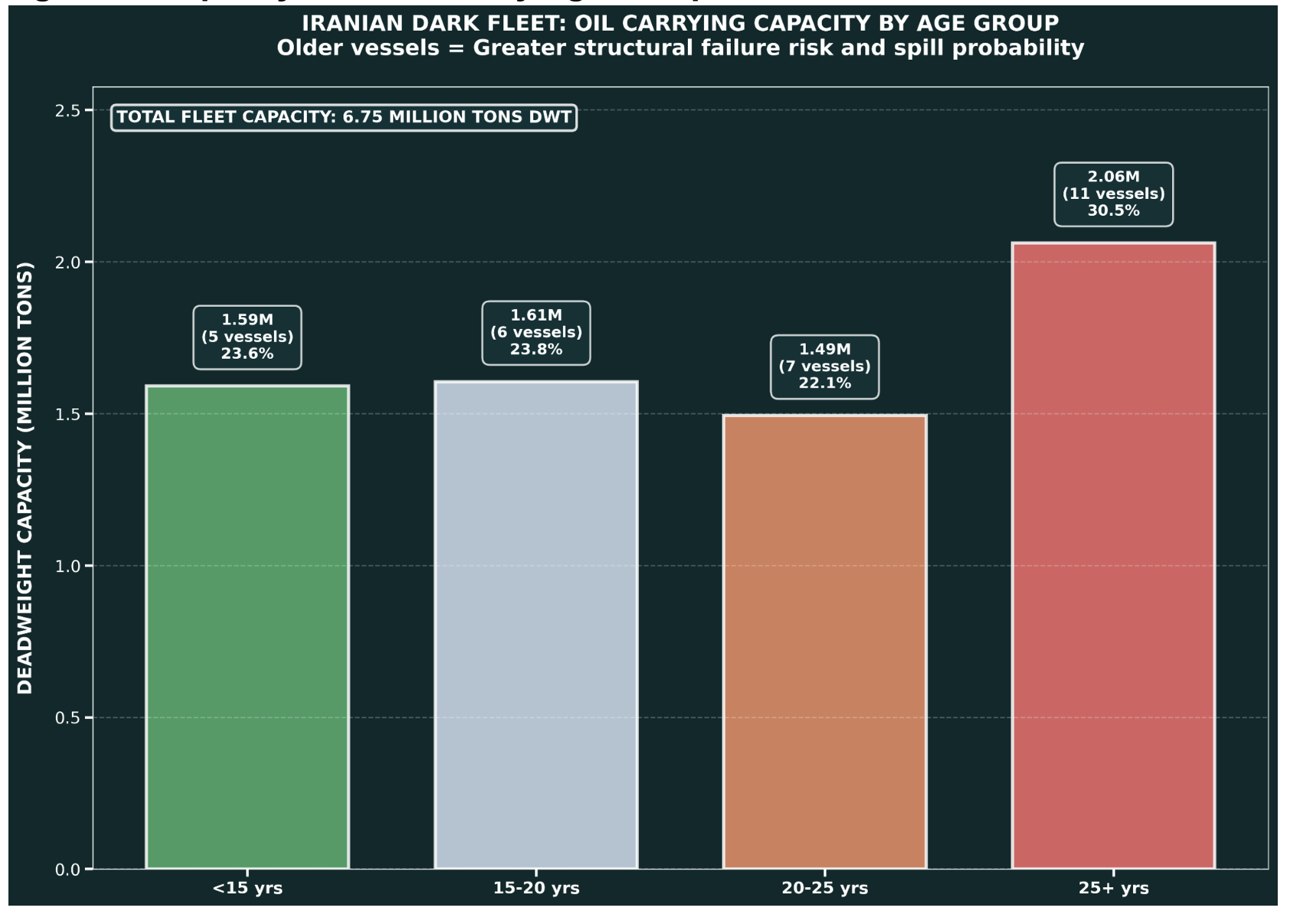
Figure 2 – Capacity Distribution by Age Group
CAPACITY DISTRIBUTION BY AGE GROUP
Total Fleet Capacity: 6.75 million tons deadweight
Breakdown:
- <15 years: 1.59M tons (5 vessels) – 23.5% – Lowest Risk
- 15-20 years: 1.61M tons (6 vessels) – 23.8% – Moderate Risk
- 20-25 years: 1.49M tons (7 vessels) – 22.1% – High Risk
- 25+ years: 2.06M tons (11 vessels) – 30.5% – Extreme Risk
CRITICAL RISK INSIGHTS
Vessels Beyond Safe Service Life (20+ years):
- 18 vessels (62% of fleet)
- 3.56 million tons capacity (52.7% of total)
- Could carry ~28 million barrels of crude oil
- 25x the Exxon Valdez spill capacity
Extreme Risk Category (25+ years):
- 11 vessels (38% of fleet)
- 2.06 million tons capacity (30.5% of total)
- Highest structural failure probability
- Most likely to experience catastrophic incidents
Figure 3 – Where are they now?
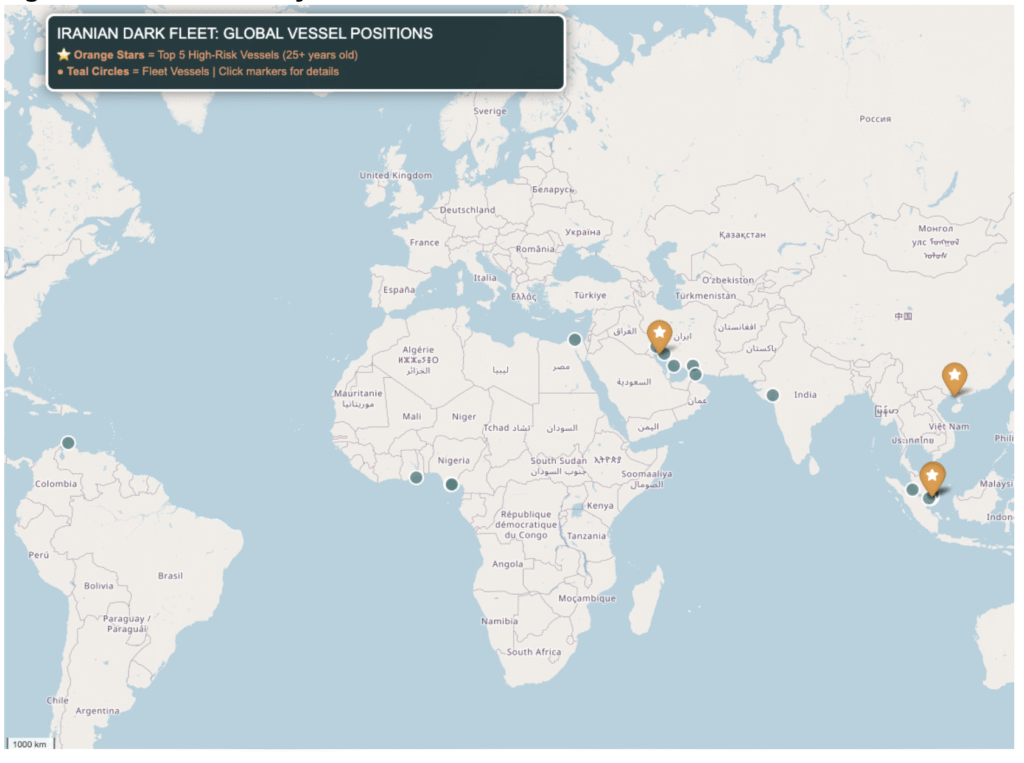
Top 5 High-Risk Vessels with Last Transmission Dates have a star above them:
- HENNA – December 11, 2025 (South China Sea, near Beihai)
- DOVER – December 02, 2025 (Malacca Strait, Malaysia)
- DOWNY – November 02, 2025 (Persian Gulf, Kharg Island)
- HASNA – September 13, 2025 (Malacca Strait, Malaysia)
- ARMAN 114 – AIS SPOOFING/DISABLED (showing 0,0 coordinates – vessel is hiding)
ECOLOGICAL RISK ASSESSMENT
Risk Factors
The Iranian-flagged fleet presents multiple overlapping risk factors that significantly elevate the probability and potential severity of an oil spill incident:
- Advanced Vessel Age: With an average age of 22 years and 3 vessels exceeding 30 years, the fleet operates well beyond recommended service life of 20 years. Older vessels experience degraded hull integrity, corroded tanks and pipes, outdated safety systems, and reduced structural capacity to withstand severe weather.
- Sanctions Constraints: Operating under international sanctions limits access to proper maintenance facilities, certified replacement parts, and qualified repair services. This creates a high likelihood of deferred maintenance and use of substandard components.
- Lack of Insurance Coverage: Iranian-flagged vessels typically lack Western P&I (Protection & Indemnity) insurance coverage, meaning limited financial resources for cleanup operations and environmental remediation in the event of a spill. This also reduces external oversight and safety inspections.
- Reduced Regulatory Oversight: Iranian flag state lacks the enforcement mechanisms of major maritime nations. Combined with sanctions evasion activities (AIS spoofing, ‘going dark’), these vessels operate with minimal international monitoring.
- Carrying Capacity: With 6.75 million tons deadweight capacity, a single large vessel incident could release cargo equivalent to multiple Exxon Valdez disasters. The fleet’s combined capacity represents 10 times the Deepwater Horizon spill.
ENVIRONMENTAL IMPACT SCENARIOS
Scenario 1: Single Large Vessel Incident
The Iranian fleet includes several VLCCs (Very Large Crude Carriers) with deadweight tonnages exceeding 250,000 tons. A catastrophic structural failure or collision involving one of these vessels could release approximately 2 million barrels of crude oil, equivalent to 8-10 times the Exxon Valdez disaster.
Immediate Environmental Impacts:
- Mass mortality of marine life including fish, seabirds, marine mammals, and sea turtles within the spill zone
- Contamination of 500-1,000+ miles of coastline depending on currents and weather conditions
- Destruction of coastal ecosystems including wetlands, mangroves, coral reefs, and spawning grounds
- Toxic oil slicks covering thousands of square miles, disrupting photosynthesis and oxygen exchange
- Severe impact on human health and livelihoods including contaminated fishing grounds, respiratory issues, and tourism collapse
Scenario 2: Multiple Concurrent Incidents
Given the fleet’s concentrated age profile and operating conditions, a severe weather event or navigation error could affect multiple vessels simultaneously. If 10% of the Iranian fleet (3 vessels) experienced spills, the combined volume could approach 6 million barrels (252 million gallons), creating an environmental catastrophe exceeding any historical oil spill.
Long-Term Environmental Consequences:
- Bioaccumulation of toxic compounds (PAHs, heavy metals) in marine food chains for decades
- Genetic damage and reproductive failures in fish populations, reducing commercial fishing yields
- Persistent oil in sediments continuing to poison ecosystems for 20-30 years
- Ecosystem collapse and loss of biodiversity in affected regions
- Economic devastation of coastal communities dependent on fishing and tourism, creating permanent unemployment
HIGH-RISK VESSELS
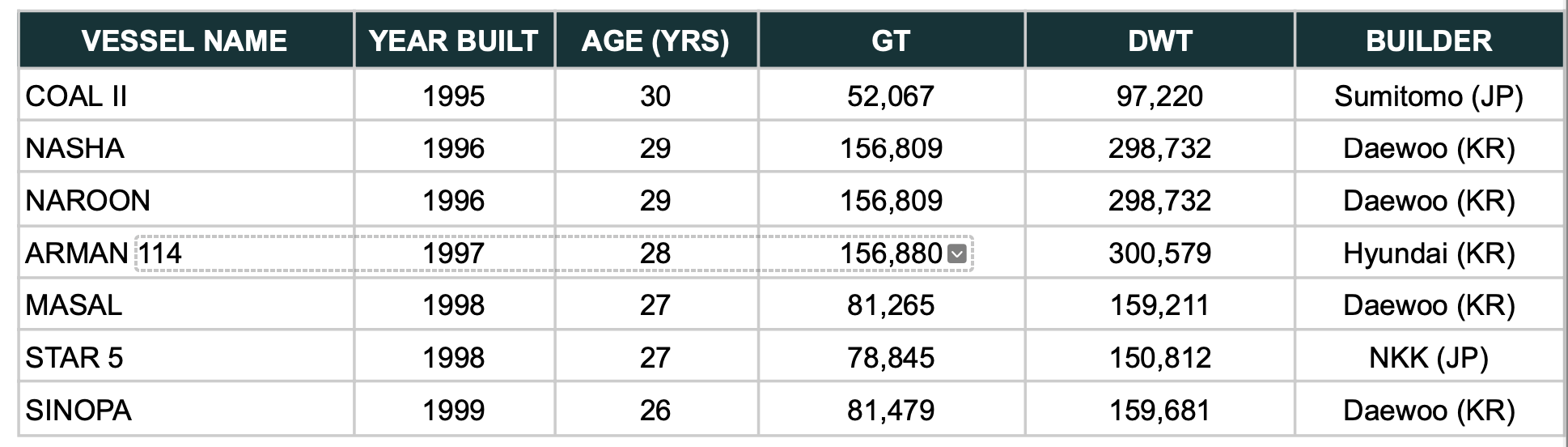
Seven vessels in the Iranian fleet exceed 25 years of age, placing them in the extreme-risk category. These vessels represent 24.1% of the fleet’s carrying capacity (1.46 million tons deadweight) and warrant immediate prioritization for enhanced monitoring and risk mitigation efforts.
RISK MITIGATION RECOMMENDATIONS
For Regulatory Authorities
- Deploy enhanced satellite monitoring systems to track Iranian-flagged vessel movements and AIS manipulation
- Strengthen port state control inspections, refusing entry to vessels that cannot demonstrate adequate maintenance records
- Coordinate international efforts to enforce environmental standards and sanction beneficial owners of high-risk vessels
- Pre-position oil spill response equipment and personnel in high-risk regions based on vessel tracking data
CONCLUSION
The Iranian-flagged component of the global shadow fleet represents a clear and present danger to marine ecosystems and coastal communities. With 3 vessels exceeding safe service life, 30.6 million tons of carrying capacity, and operations conducted under sanctions constraints with minimal oversight, the probability of a catastrophic spill incident is unacceptably high.
The potential environmental and economic consequences of an Iranian fleet spill could dwarf historical disasters like the Exxon Valdez and Deepwater Horizon. The combination of advanced vessel age, lack of insurance coverage, reduced maintenance standards, and proximity to sensitive marine habitats creates conditions for an environmental catastrophe that would affect ecosystems and communities for decades.
Urgent action is required from international regulatory bodies, financial institutions, and insurance providers to monitor, restrict, and ultimately phase out these high-risk vessels before inevitable disasters occur. The maritime industry, banking sector, and government agencies must coordinate efforts to prevent what could become one of the worst environmental catastrophes in modern history.