
PurpleTRAC (Maritime Risk & Compliance)
Refreshed Brand Identity
What’s new
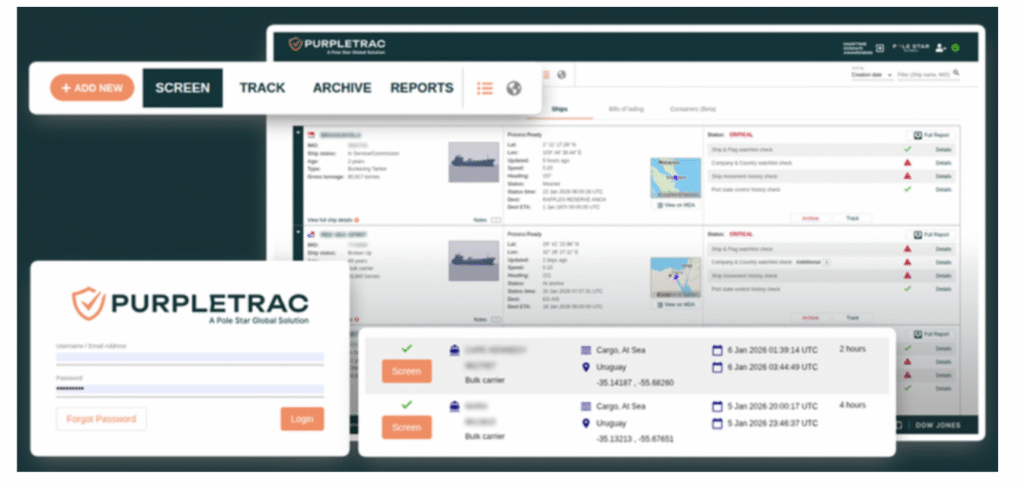
Refreshed PurpleTRAC look, including a new logo and updated brand colours, as part of Pole Star Global’s wider brand evolution.
Why it matters
- A clearer, more recognisable identity that makes it easier to spot official PurpleTrac communications and updates.
- A cleaner interface designed to improve consistency across Pole Star Global products, without changing how you use PurpleTrac today.
Podium (Shipping & Offshore)
New Look User Interface
What’s new
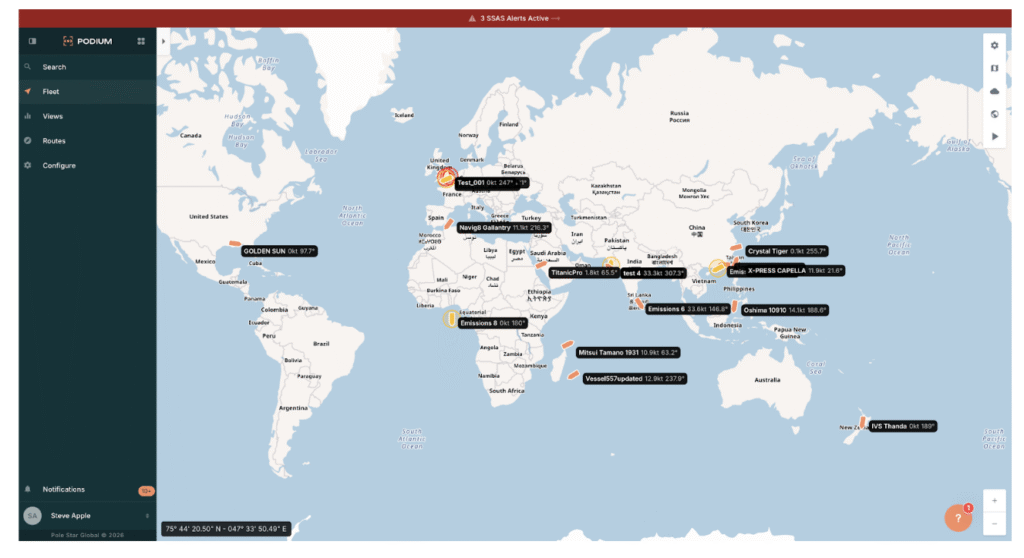
Refreshed Podium user interface and navigation experience, including a new collapsible side navigation bar, updated colours, fonts, and logo as part of Pole Star Global’s wider brand evolution.
Why it matters
- Enhanced visual consistency across Pole Star Global products, while keeping all existing menus, URLs, and workflows unchanged.
SSAS – Vessel Icons & Colours
What’s new
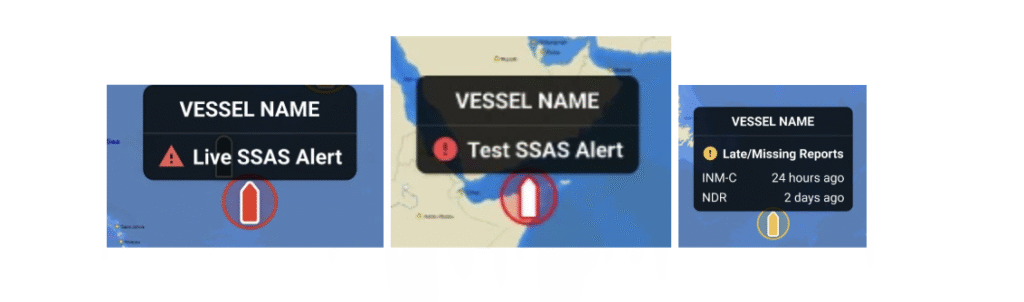
- Live SSAS Alert – Red icon with white border and red circle
- Test SSAS Alert – White icon with red border and red circle
- Warnings – Yellow icon with white border and yellow circle for late/missing reports
- Colour-coded labels offer clear distinction between alert types
Why it matters
- Instantly identify alert type at a glance – no more ambiguity
- Faster, more confident response to genuine security events
- Reduced risk of misidentifying test alerts as live incidents
Poll – On-Demand Position Request
What’s new
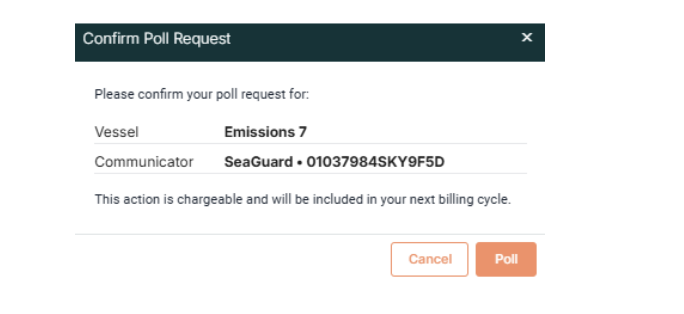
- Request a vessel’s real-time position instantly, without waiting for the next scheduled report
- One-click Poll button directly from the vessel card on the fleet page
Why it matters
- No more waiting for scheduled Sat-C reporting intervals
- Improves decision making in time-critical situations
Data Insights
Vessel Port Calls API — Berth-Level Event Tracking
What’s new
- The Vessel Port Calls API now returns berth arrival and berth departure events in addition to existing port area events.
- Each berth event includes berth name and unique berth ID.
- Enables tracking from port approach through to specific berth locations.
For technical documentation, refer to our developer portal.
Why it matters
- Unlocks accurate berth-level dwell time analysis.
- Improves terminal utilisation and congestion visibility.
- Enables more precise ETA modelling and operational performance tracking.
- Supports better berth allocation planning for ports.
- Enhances supply chain predictability and demurrage cost management.
Vessel Positions API — Flexible Real-Time Geographic Search
What’s new
- New Vessel Positions API endpoint: POST /unified-position/v1/positions
- Real-time vessel position search using custom polygon zones, circular zones (latitude / longitude / radius), and vessel identifiers (MMSI, IMO, name)
- Returns navigational status, speed, course, destination, and vessel characteristics.
- Supports configurable downsampling and pagination.
For technical documentation, refer to our developer portal.
Why it matters
- Enables real-time situational awareness across dynamic, custom-defined areas.
- Supports monitoring of irregular coastlines, shipping lanes, emergency zones, and regulatory areas.
- Eliminates reliance on static, pre-configured zones.
- Accelerates operational response during evolving events.
- Expands use cases requiring flexible spatial intelligence.
Meridia
Custom Geographic Zones (In-UI Creation & Monitoring)
What’s new
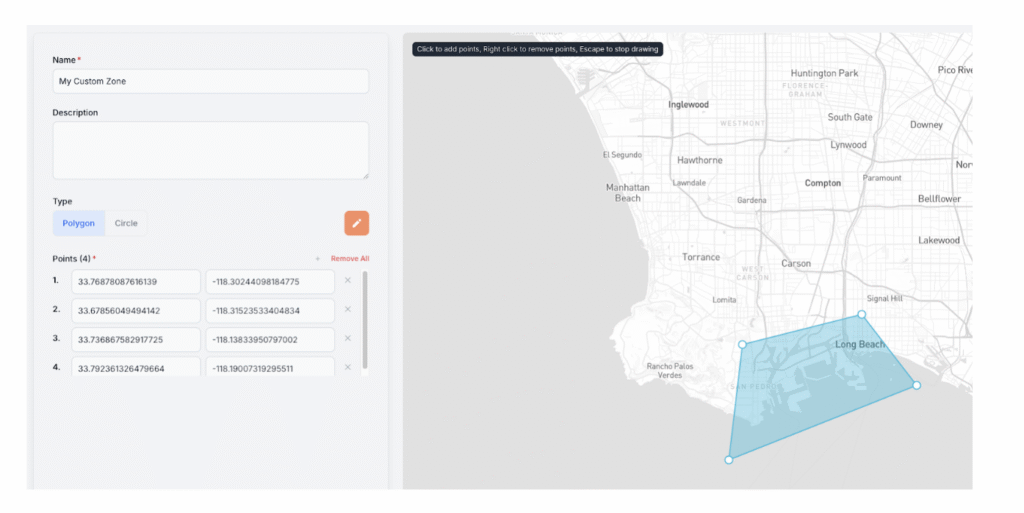
- Users can now create custom geographic zones directly within the Meridia UI.
- Supports polygon and circular zone creation via interactive map.
- Real-time coordinate and radius editing.
- Custom zones generate vessel entry/exit events.
- Fully integrated with notifications, screening workflows, and analytics.
- Accessible via: Library > Zones > Custom Zones
Why it matters
- Enables precise monitoring of operationally relevant areas without API integration.
- Supports temporary or evolving surveillance zones.
- Matches exact regulatory or operational boundaries.
- Reduces dependency on support requests or overlapping static zones.
- Improves operational flexibility and response speed.
MDA (Government Global Services)
VMS Fleet Management – Archived Ship Re-registration
What’s new
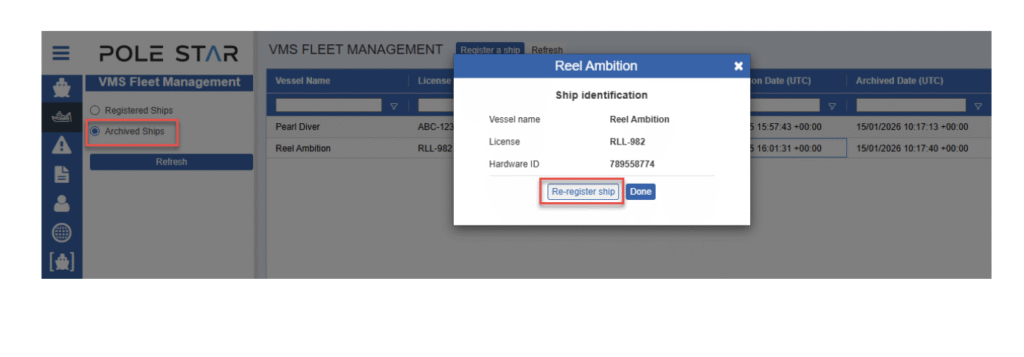
VMS Fleet Management now allows archived ships to be re-registered. Users can restore a vessel from the Archived Ships view back into the active fleet, without creating a new record. This ensures vessels that return to service can be reactivated quickly, while retaining their existing history.
Why it matters
- Supports real-world vessel lifecycle changes without duplication
- Retains historical data while restoring full operational visibility
- Simplifies fleet management as vessels move in and out of service
Maritime Transparency Index
MTI — My Vessel
What’s new
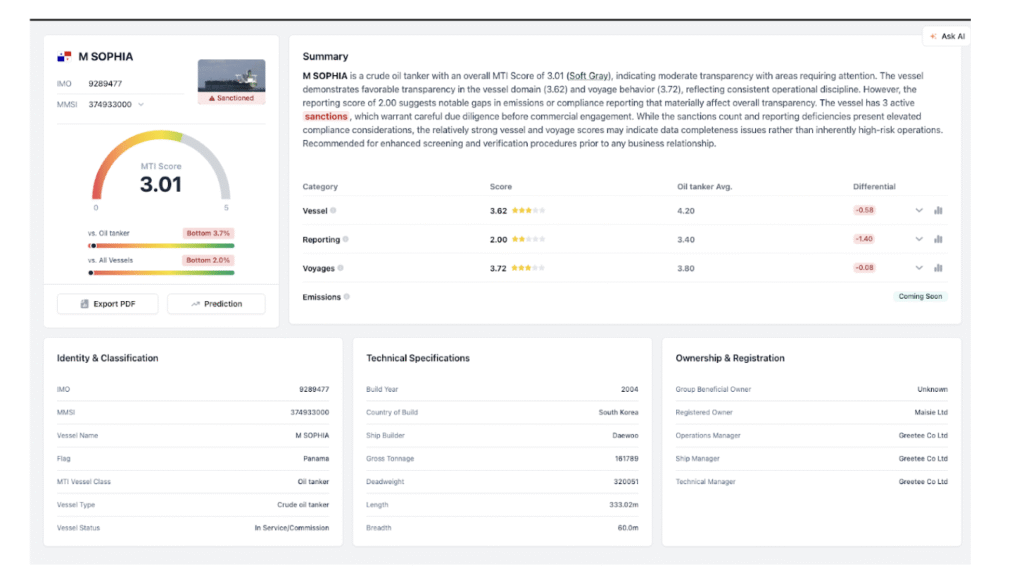
- Introduction of the MTI Score, providing an overall measure of vessel transparency and operational integrity based on behaviour, reporting quality, and voyage patterns.
- New Score Summary section offering structured, AI-generated narrative explanations of the vessel’s MTI results.
- Component-level scoring framework including:
- Vessel Score (historical and structural attributes such as age, ownership changes, flag transitions, sanctions history, deficiencies and detentions)
- Reporting Score (AIS reporting integrity, gaps, frequency, duration, spoofing indicators)
- Voyage Score (port calls, STS activity, dwell time, slow steaming, unexplained delays)
Why it matters
- Quickly assess vessel transparency and operational risk through a single consolidated score.
- Understand the underlying drivers behind performance using clear, structured explanations.
- Reduce manual analysis while preserving scoring accuracy and consistency.
ℹ️ Narrative explanations are generated using advanced GenAI models. Score values and scoring logic remain unchanged.
MTI — Categorical Score Distribution Comparison
What’s new
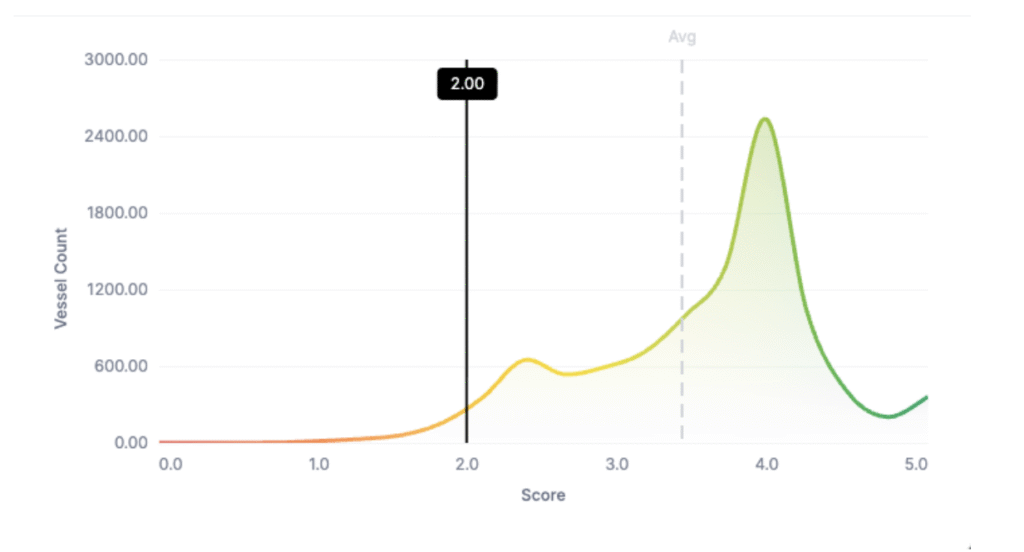
- Visual comparison of a vessel’s MTI score against the full distribution of scores within its vessel category (e.g., oil tankers).
- Distribution curve showing how vessels are spread across the MTI range.
- Category average reference line.
- Display of the differential between the vessel’s score and the category average.
Why it matters
- Adds contextual understanding by showing how a vessel performs relative to peers.
- Highlights deviations from expected transparency or compliance norms.
- Enables more informed assessment of operational and category-specific risk.
MTI — Score Prediction (Forward-Looking Insights)
What’s new
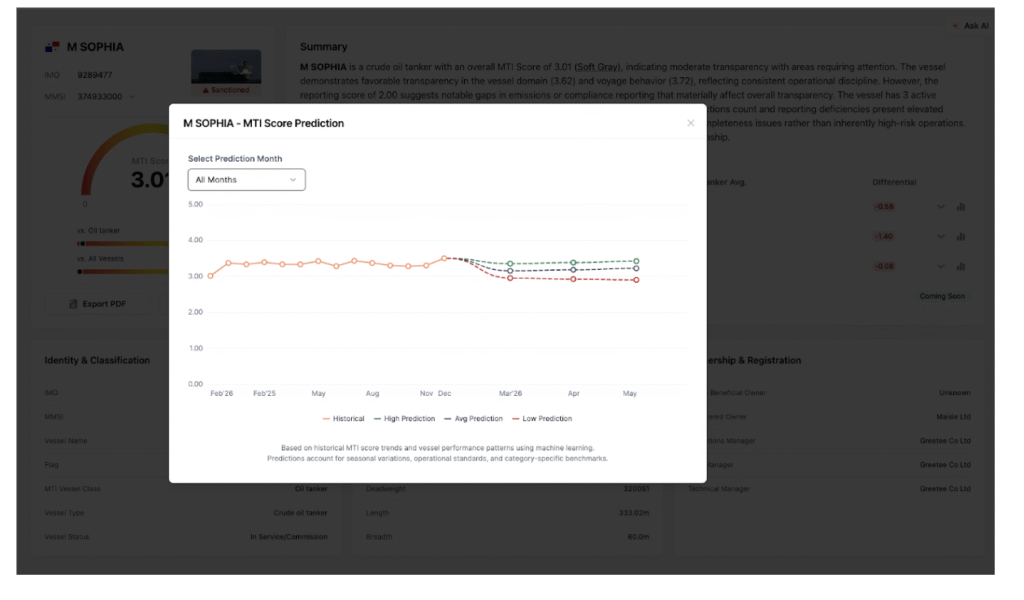
- MTI Score Prediction powered by historical score trends and machine learning analysis.
- Three forecast scenarios:
- High Prediction (best case performance range)
- Average Prediction (most likely expected outcome)
- Low Prediction (conservative performance scenario)
- Dynamic updates as new MTI performance data becomes available.
Why it matters
- Provides forward-looking visibility into expected MTI performance.
- Identifies potential transparency or compliance shifts early.
- Supports proactive operational planning and commercial decision-making.
MTI — Ask AI Assistant
What’s new
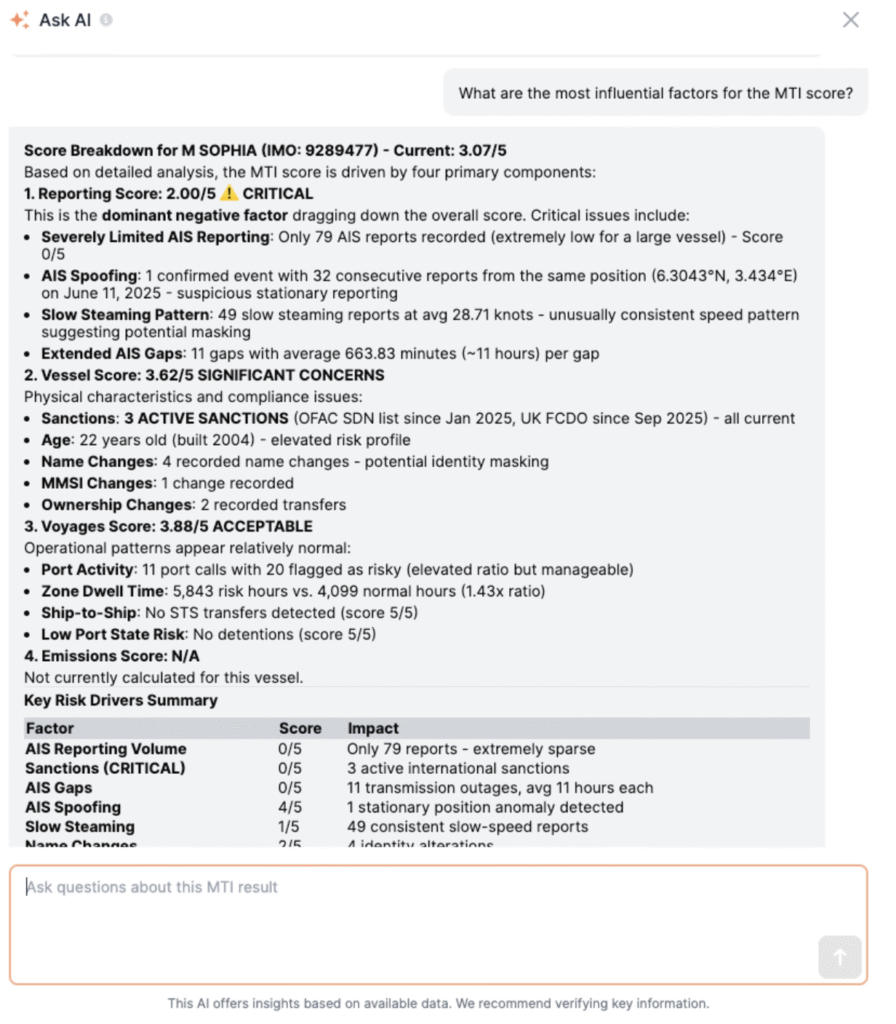
- Natural language AI assistant enabling users to ask structured questions about a vessel’s MTI profile.
- Component-level score breakdowns and key performance drivers.
- Structured explanations of reporting behaviour, voyage patterns, and risk indicators.
- Integration of predictive insights when score forecasting data is available.
Why it matters
- Simplifies interpretation of complex MTI scoring signals.
- Improves transparency into risk contributors and behavioural patterns.
- Reduces the need for manual investigation across multiple datasets.
- Supports compliance, risk, and operations teams with clear, contextual insights.
ℹ️ All AI-generated explanations interpret available MTI data without modifying underlying score values.
MTI — Vessel Technical & Ownership Panels
What’s new
- Identity & Classification Panel (IMO number, MMSI, vessel name, flag, class, vessel type).
- Technical Specifications Panel (build year, country of build, tonnage, dimensions, hull details).
- Ownership & Registration Panel (beneficial owner, registered owner, operations manager, technical manager).
Why it matters
- Strengthens vessel identity verification and screening workflows.
- Improves detection of identity inconsistencies or ownership opacity.
- Supports sanctions exposure analysis and due diligence processes.
- Enhances contextual understanding of vessel operational background.
Coming Up
MTI — My Fleet (Fleet View)
What’s coming
- Unified fleet-level MTI dashboard.
- Consolidated fleet MTI score.
- Risk segmentation and score distribution views.
- Vessel-level insights including key risk drivers and recent score changes.
- Filtering across flags, vessel types, and risk categories.
- AI-powered explanations for fleet-wide insights.
- PDF export for reporting.
Why it matters
- Enables portfolio-wide transparency oversight.
- Identifies high-risk vessels and emerging exposure patterns.
- Supports compliance reporting and executive-level visibility.
Ask AI Assistant — User Journey Enhancements
What’s coming
- Guided leading questions to support faster analysis.
- Historical conversation view for continuity and tracking.
- Integrated map visualisations within chat for voyage and behavioural questions.
- Additional graphical insights (scatter graphs, bar charts, line graphs).
Why it matters
- Improves workflow continuity and usability.
- Enhances interpretability of MTI components through visual context.
- Supports deeper behavioural and geographical analysis.
New Score Categories
Emissions Score
What’s coming
Environmental transparency measure within MTI. Evaluation of total CO₂ emissions, emission intensity factors, activity in Emission Control Areas, slow steaming behaviour, and alignment with environmental standards.
Why it matters
- Expands MTI into environmental risk and sustainability transparency.
- Supports regulatory reporting and operational benchmarking.
- Strengthens fleet-level environmental exposure assessment.
Sanctions Score
What’s coming
Dedicated sanctions risk assessment within MTI. Analysis of historical sanctions records, active listings, and ownership-related sanctions exposure.
Why it matters
- Consolidates sanctions-related transparency signals.
- Strengthens due diligence and compliance confidence.
- Provides clearer visibility into sanctions-linked vessel risk.